



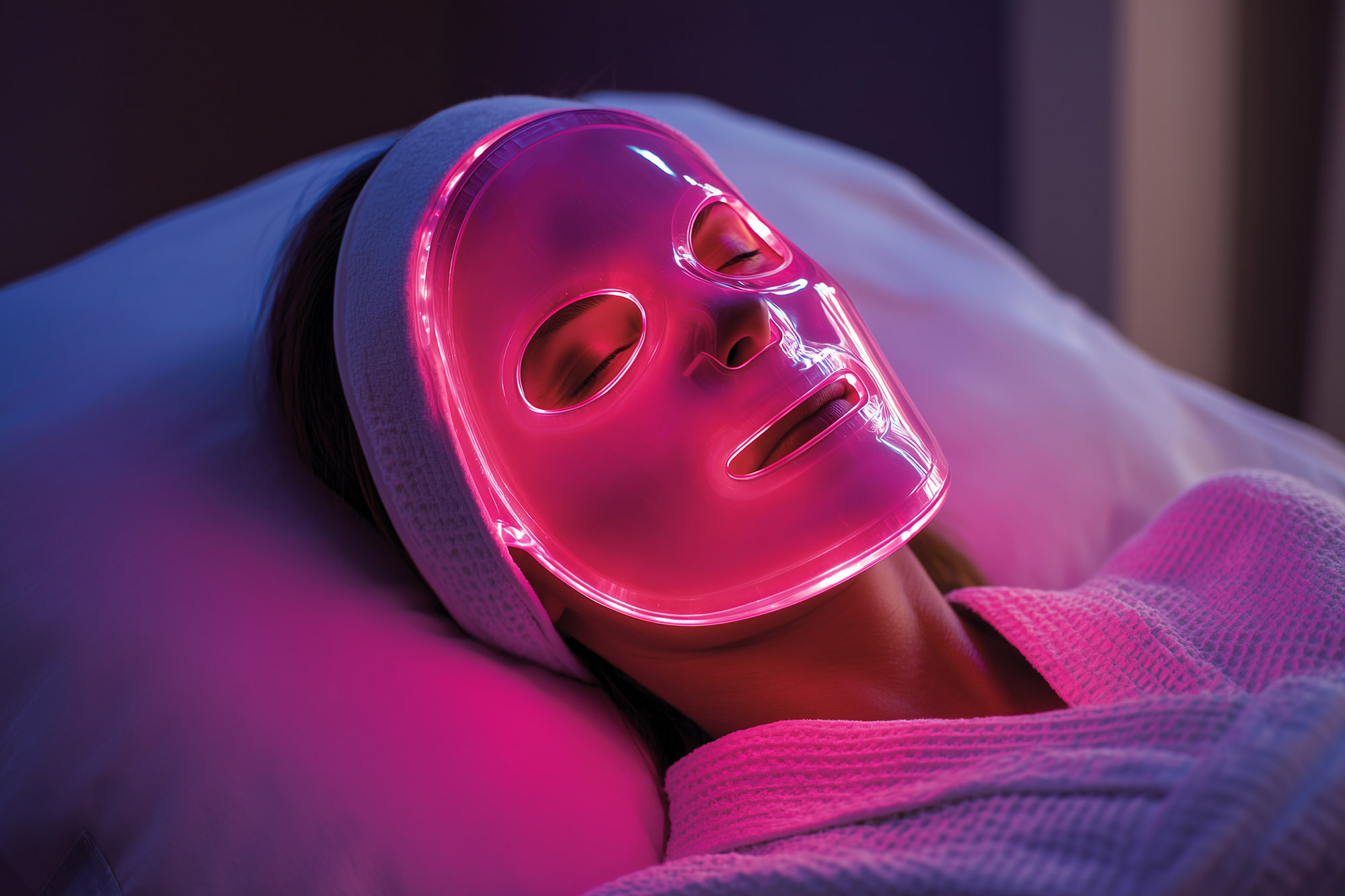
Every so often, a new trend emerges, promising unimaginable results for skin care. More often than not, those trends turn out to be nothing more than fads promoted by companies pitching snake-oil treatments that benefit their pocket and no one else.
Red-light therapy is among the latest trends to capture the attention of beauty enthusiasts, but how effective is this technology, and what should you watch out for?
Opulent Aesthetics values integrity, believing that treatments should only be offered if they deliver on their promises. That’s why we help you discern fact from fiction, so you waste no time or money on getting the results you deserve.
We uphold this ethos with all of our beauty treatments in Caterham, so much so that our clients travel far and wide from neighbouring towns like Beckenham, Sutton, Purley, Croydon, and Bromley, for the special Opulent Aesthetics treatment.
This article is testimony to the fact that we put you, our clients, first, by arming you with the knowledge you need to make an informed decision.
Opulent Aesthetics now offers medical-grade LED light therapy, using Dermalux’s high-tech equipment, delivering far more powerful results than conventional home-use products.
What is LED light therapy?
LED light therapy is the use of specially designed lights that emit red, blue, yellow, and near-infrared light, causing biomodulation. In other words, the light sources, at the correct wavelength, trigger biological processes that are beneficial to the body.
- Light therapy, also known as ‘photobiomodulation’ triggers the following biological processes:
- Cellular absorption – The light is absorbed by your mitochondria (the factory “powerhouses” of your cells, responsible for creating cellular energy ), which are thought to become energised.
- Increased ATP – This energy absorption leads to an increase in Adenosine Triphosphate (ATP) production, which provides more energy for cellular function and repair.
- Biological Responses – The energised cells trigger various intracellular photochemical reactions. For example, red light stimulates fibroblasts, which are responsible for producing collagen and elastin, and blue light is absorbed by porphyrins naturally found in P. acnes bacteria, leading to the creation of oxygen-free radicals that destroy the bacteria, reducing infections and outbursts of certain medical conditions.
What are the benefits of LED light therapy?
The full benefits of LED light therapy are not yet known, however, scientific studies thus far have found key benefits in the following areas:
- Anti-ageing and skin rejuvenation – red and NIR light can stimulate collagen and elastin production, leading to a reduction in fine lines, wrinkles, skin roughness, and an improvement in skin firmness.
- Acne treatment – blue light targets and destroys the acne-causing bacteria (P. acnes). Red light is often combined with blue to reduce inflammation and promote healing of existing blemishes.
- Wound healing – red and NIR light can accelerate the healing of wounds and reduce associated redness, swelling, and bruising, partly due to increased circulation and collagen synthesis.
- Other potential benefits – studies have also explored its use for hair regrowth (for male/female pattern hair loss) and pain relief/inflammation (e.g., in arthritis and fibromyalgia), however, more studies are required to prove its efficacy in this domain.
Is LED light therapy safe?
LED light therapy is considered safe and non-invasive, as it does not use UV light, which can cause burns. Having said that, in very rare instances, it can cause inflammation, but this is more indicative of an underlying medical issue in the patients, or their sensitivity, rather than a broader risk from the treatment. Here are some of the general concerns associated with LED light therapy:
- Cost – professional LED equipment can be very expensive, spanning hundreds or thousands of pounds for the most effective technology. This cost is easily averted by booking an appointment with Opulent Aesthetics, which uses Dermalux medical grade technology.
- Time consuming – LED light therapy is not a light-switch for results, but rather a dimmer switch (excuse the light analogy, providing gradual results over time. You normally require 10-12 30 minute sessions over 12 weeks, to really see results.
- At home devices are not always effective – unfortunately, products typically bought for home use are either not powerful enough to develop meaningful results in the same 12 period, as would a professional machine, or worse, are a gimmick providing the incorrect light source and wavelength. In other words, there are a lot of fake products out there trying to capitalise on the hype.
- Irritation – some people, although rare, experience mild irritation after using LED light therapy. It typically subsides very quickly, however.
- Risks to eye health – the very nature of LED light therapy is the use of bright lights that can, potentially cause harm to your eyes, if protective goggles aren’t worn.
- Risks to photosensitive vulnerabilities – some people, especially those taking certain medication, can become more sensitive to light in general. Under such circumstances, there is an increased risk of irritation. It is best to check your medication and consult your doctor, if you have concerns about compatibility.
What to look for in an LED light therapy device
As with most things, not all products on the market are made equally, and this is particularly true with home-use devices, which can vary incredibly, and it is often difficult, if not impossible to gauge the effectiveness of a product and whether a product lives up to its promises, without specialist equipment. Here is a quick overview on what to look for:
- Wavelength specification – a quality device will clearly state the specific wavelengths (in nanometers, nm) it emits. Look for the clinically effective ranges (e.g., 630-680 for red light; 400-470 for blue light). Vague claims are a red flag.
- Irradiance/power density – this is the measure of the light’s strength or intensity (power delivered per unit area). Higher irradiance means a more effective dose of energy can be delivered in a shorter session. Low-cost devices often have low irradiance, requiring very long or frequent sessions, making it unrealistic to stick to, to achieve meaningful results. Mid-range irradiance for at-home use is typically 30-80 m W cm2 measured at the skin’s surface.
- Density and coverage: The device should have a sufficient number of LEDs placed to ensure full and uniform coverage of the treatment area without dark patches, which ensures even dosing across the skin.
- Regulatory clearance or approval – look for devices that have received regulatory clearance. This indicates the device is considered safe and the manufacturer has provided evidence that the device works for the intended purpose. Regulatory clearance is not the same as regulatory approval (which is for drugs and high-risk devices), but it’s a good safety and efficacy benchmark.
- ➢ Clinical data concerning third-party testing – Reputable brands often mention independent third-party testing or published clinical data verifying the device’s efficacy and power output.
Must read: Regular vs “Clinical Grade” Skincare Products
How to optimise results
There is no escaping this fact; even the best home-use device won’t deliver the same quality results as a professional machine, and certainly not in the same period of time.
The best way to achieve powerful results in a relatively short period of time is to access professional equipment for a 10-12 week course. It will cost a similar sum to that of the best at-home devices, but your results are virtually guaranteed, unlike with the home-device.
Opulent Aesthetics delivers LED light therapy using Dermalux’s medical-grade technology, ensuring the most powerful lights, operating at the optimum frequency for results.
Spending £200-300 on a home device that delivers marginal results over 12-24 months, is neither saving you time nor money, and as time passes your skin naturally deteriorates, making any gains negligible over that same period.
Instead, book yourself an appointment with Sadie at Opulent Aesthetics in Caterham, a course of 10 treatments will cost just £250, or you can add it to another treatment like a facial, microneedling or a skin peel for just £15, encouraging better healing and faster all-round results.
Why Dermalux is better
Dermalux manufactures unrivalled, medical-grade LED light therapy, delivering high-quality, and measurable results. In this instance, the term ‘medical-grade’ means that the FDA (USA) has recognised it as a medical device, and it is also CE certified as such within Europe.
Dermalux is made in the UK and is certified for high manufacturing standards under ISO13485 and ISO9001. Designed specially for professional medical and cosmetic settings, it is leaps and bounds beyond mass-produced products made in China and sold on Amazon.
What sets Dermalux apart is measurable and discernable:
- Photon rich delivery – Dermalux targets the chromophore with the optimum photonic energy delivering maximum cell activation, ensuring consistent and proven results.
- Precise and proven wavelengths – Dermalux consistently delivers the optimum wavelength of light with a maximum discrepancy tolerance of 02 nanometers, ensuring that your cells maximise absorption. Competitor device tolerance discrepancy can be as high as 50 nanometers, causing light to be wasted and ineffective.
- Concurrent modality treatment – Dermalux, is presently the only device that delivers 3 concurrent wavelengths simultaneously, at optimum intensity, ensuring maximum delivery of photonic energy to the targeted chromophore zone.
- Targeted light technology – Dermalux is specially designed with accompanying software to ensure that treatment areas are targeted with precision, ensuring that no photonic energy is wasted.
Final thoughts
LED light therapy can be an effective form of treatment if you are using a device that delivers high-quality photonic energy. Unfortunately, most home devices don’t live up to the hype, failing to deliver meaningful results, even with long-term use.
Opulent Aesthetics, using Dermalux LED, delivers the most advanced technology in LED photonic therapy, ensuring noticeable, and proven results. The treatment is non-invasive, inexpensive, and is proven to improve the quality of your skin from the inside.
Few treatments offer such great benefits so quickly, with no down time, and Dermalux LED light therapy makes other treatments like microneedling, facials, and skin peels, more effective.
So, if you want to brighten your appearance and achieve that radiant glow, follow the light, and book an appointment with Sadie and Opulent Aesthetics.